
Fine‑Tuning Calcium Phosphate for Bioprinting:
Calcium phosphate has long been one of the most trusted materials in orthopedics and regenerative medicine. Its chemical similarity to human bone, its biocompatibility, and its ability to support natural remodeling make it a reliable material in coatings, bone substitutes, and implantable devices. As the field moves toward more personalized and biologically relevant solutions, calcium phosphate is also emerging as a functional material for bioprinting.
At GeSiM, we are excited to take a meaningful step in this direction through our collaboration with CAM Bioceramics, a European leader in high‑quality calcium phosphate powders and granulates. By combining their decades of expertise in material science with our precision bioprinting technology, we aim to make advanced biomaterials more accessible for real‑world applications.
What is calcium phosphate and why does it matter?
Calcium phosphate refers to a family of ceramic materials that differ in composition, particle size, and porosity. These variations influence dissolution behavior, cellular interactions, and the material’s ability to support new bone formation. It is widely valued because:
- It closely mimics the mineral phase of human bone.
- It supports osteoconduction and, in some formulations, osteoinduction.
- Its properties can be tuned through particle size, porosity, and Ca/P ratio.
In practice, this allows calcium phosphate to be formulated for:
- fast resorption when rapid replacement by native tissue is desired,
- longer‑lasting structural support when stability is required,
- coatings that enhance implant integration.
These characteristics make it a strong candidate for integration into bioprinting workflows, particularly as researchers seek materials that combine mechanical function with biological relevance.
Where Bioprinting Comes In
Bioprinting enables the controlled deposition of biomaterials and cells in three‑dimensional architectures. When combined with calcium phosphate, it opens the door to:
- Patient‑specific bone grafts
- Hybrid constructs combining polymers and ceramics
- In‑vitro models for drug testing and disease research
- Next‑generation implant prototypes
However, printing ceramic powders is not trivial. It requires the right carrier materials, optimized parameters, and a deep understanding of how the material behaves during extrusion.
Fine‑Tuning Calcium Phosphate for Bioprinting
Over the past months, we have worked closely to adapt CAM Bioceramics’ calcium phosphate powders for use on GeSiM’s bioprinters. Because the material is supplied as a powder, it was tested with different carrier combinations and successfully printed.
These validated printing parameters will be made available to any researcher or developer working with CAM Bioceramics’ materials. As always, GeSiM’s material‑parameter support remains free of charge, reflecting our commitment to lowering barriers for innovation.
And this is only the beginning. We will continue expanding the library of compatible carriers and formulations based on community needs.
A Trusted Partnership for the European Bioprinting and Biomaterials Community
This collaboration strengthens the bridge between two fields that increasingly depend on one another: biomaterials and bioprinting. By aligning CAM Bioceramics’ material expertise with GeSiM’s precision printing technology, we aim to provide researchers and industry partners with:
- Reliable, ready‑to‑use printing workflows
- Material combinations that support real‑life applications
- A trusted European partnership for calcium phosphate and bioprinting
This initiative also aligns with GeSiM’s broader mission: to offer pre‑validated, high‑quality printing parameters that accelerate development and help bring translational medicine closer to clinical reality.
We look forward to supporting researchers, developers, and companies as they explore new applications, from orthopedic implants to regenerative therapies and beyond.
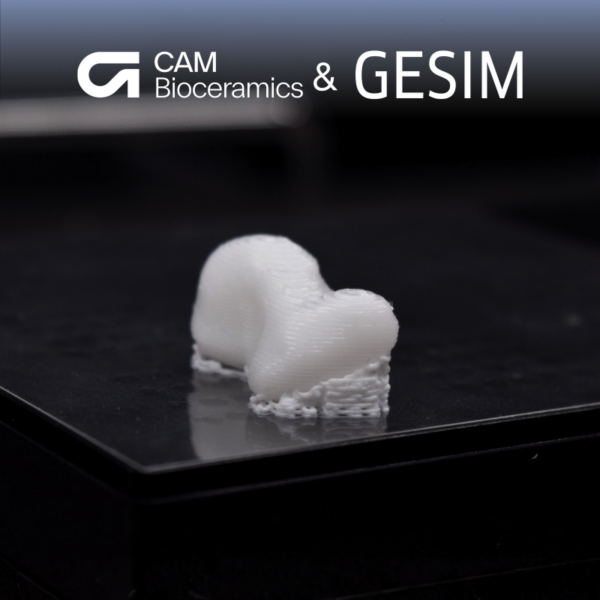
3D print of a Scaphoid from hydroxyapatite
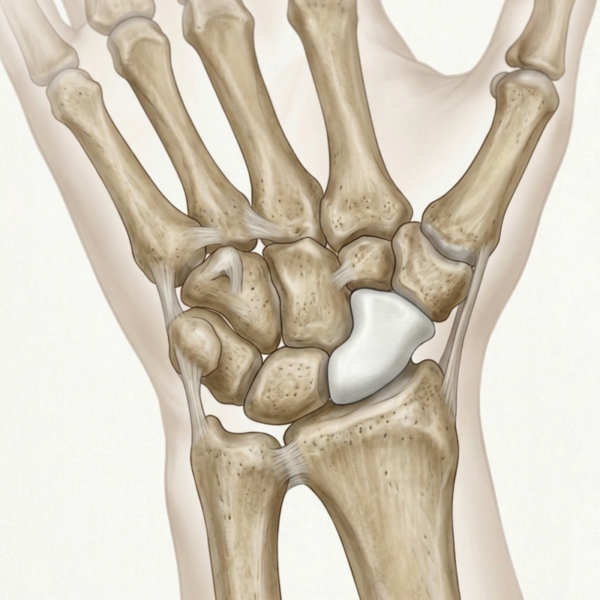
Anatomic position of the Scaphoid in the human hand