
Advancing Microbiological Water Monitoring with ECOPLAS: Fast, On‑Site E. coli Detection:
Real‑time microbiological water monitoring is no longer a distant goal. Culture‑based E. coli testing typically takes 24–72 hours, preventing timely operational decisions, which is why the ECOPLAS project is developing a compact, on-site measurement system for near-real-time detection of E. coli in freshwater, intended for applications such as water reuse, agricultural irrigation, bathing water surveillance, and raw water monitoring. The device is conceived for automated operation (sampling, measurement, regeneration, cleaning) and can be used as a portable unit, benchtop device, or fixed station, including remote deployment.
The system combines a plasmonic sensor with fluorescence readout to measure both E. coli concentration and cell viability within the same cycle, without culture steps or metabolic assays. Its core is a nanoscale pillar array coated with a thin gold layer; when light excites surface plasmons, binding of E. coli to antibody-functionalized surfaces shifts the resonance wavelength proportionally to concentration. Fluorescent dyes then indicate membrane integrity to distinguish intact from non-intact cells, enabling assessment of disinfection. The integrated sample preparation can be adapted to water quality, and operation can be automatic with adjustable measurement cycles, including external triggering (e.g., turbidity).
GeSiM supplies the process and microsystems technology that turns the laboratory sensor prototype into a functioning, operable module ready for integration, validation, and field testing. The ECOPLAS consortium also includes Fraunhofer IKTS, the Institute for Hygiene and Public Health (University Hospital Bonn), Dresden Elektronik Ingenieurtechnik GmbH, ECH Elektrochemie Halle GmbH (system integration), Emscher Wassertechnik GmbH, Abwasserverband Braunschweig, and ISOE – Institut für sozial-ökologische Forschung.
The targeted E. coli measurement range is approximately 10–10,000 KBE/100 ml, with an aim of 10% maximum measurement uncertainty, supporting monitoring against regulatory frameworks (e.g., EU 2020/741, 2006/7/EG). Multi-month demonstration campaigns are planned from late 2026 at the Braunschweig Steinhof WWTP near the UV disinfection stage and in river monitoring with the Emschergenossenschaft/Lippeverband, including exploration of UV control concepts based on residual E. coli. An ECOPLAS user dialogue in spring/summer 2026 invites practitioners to help align handling, processes, and use contexts with real needs.
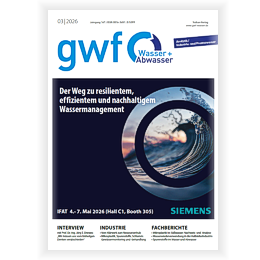
Laura Backes et.al: Entwicklung eines Online-Messgeräts zur Nahe-Echtzeit-Detektion von E. coli vor Ort (German language)

Duration: 01.11.2024 – 31.10.2027
Volume: 2.84 Mio EUR